

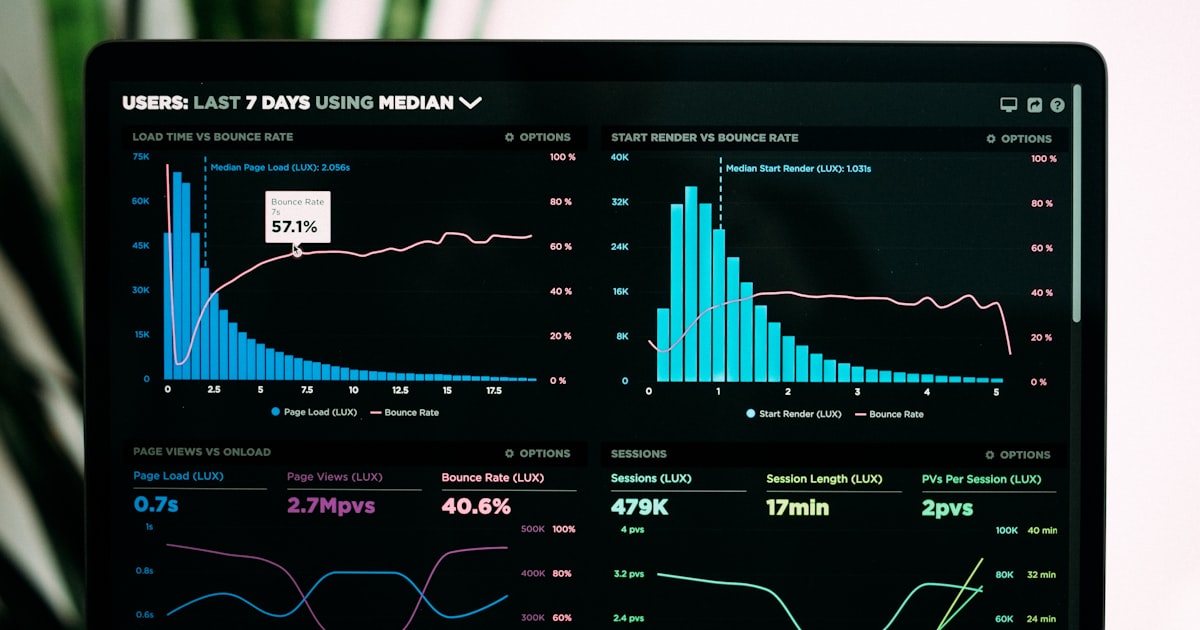
Who This Is For — and What You'll Get
If you run a plumbing, HVAC, electrical, roofing, or landscaping/snow company in Cochrane, AB, you don't need a complicated software tower to know what's working. You need to see — in one glance — which pages and campaigns drive call taps, quote form submits, and booked jobs, and how fast your team responds.
This owner-friendly guide gives you:
- The simplest measurement stack (Google Analytics 4 + Search Console + three events)
- A clear way to track phone call taps — without buying new numbers
- A reliable method to track quote form submissions
- UTM tagging you can use on emails, social posts, and ads
- A monthly scoreboard template that shows what moved the needle
- Speed and UX tips so your Contact/Quote page feels instant on phones
- Copy blocks and checklists you can hand to your web person
[download:tracking-setup-checklist] If you'd like us to wire this in for you, see Cochrane trade website services.
Here's the short version before we dive in:
TL;DR
Use GA4 for events, Search Console for Google clicks/impressions, and simple UTM tags on your links. Track three things: call_click, quote_form_submit, and email_click. Mark call and form events as Key events (so they appear as conversions). Read your monthly leaderboard: which pages sparked calls/forms and how fast you replied. Keep your quote page fast on phones.

Data-driven decisions lead to measurable business growth
Photo: UnsplashThe Simplest Stack That Answers "What Brought This Lead?"
You don't need a call-tracking vendor to get started. For a Cochrane trade, this stack covers 95% of decisions:
- Google Analytics 4 (GA4) — a free tool from Google that records events on your website and shows you which pages and sources led to calls and forms.
- Google Search Console (GSC) — another free Google tool that shows clicks and impressions from Google Search by query and page.
- UTM parameters — tiny labels you add to your links so GA4 can group email, social, and ad traffic by source, medium, and campaign.
Owner goal: in one 5-minute look, you can answer:
- Which pages triggered call taps and quote form submits last month?
- Which campaigns (email/social/ads) pulled their weight?
- How fast did we reply? (Average minutes to first human response)
Now that you know the tools, let's set up the first — and most valuable — event: call tracking.
Track Phone Calls Without Buying New Numbers
Most of your calls start with a tap-to-call on a mobile phone. That's the easy win.
How to Set Up Call Tap Tracking
Ask your web person to do these three things:
- In Tag Manager (Google's free tool for adding tracking code to your site without editing the code directly), create a link click trigger that fires when the Click URL starts with
tel: - Send a GA4 event named
call_clickwith these parameters:link_url(the tel number)page_location(the page where the tap happened)page_title
- In GA4, mark
call_clickas a Key event (Google's term for a conversion — the actions you care about most), so it shows up in your conversions report.
Owner tip: Don't change your phone numbers just to "track" calls. Start by tracking the click to call. If you later need dynamic numbers for ad-level detail, you can add it — but most owners don't need it on day one.
Where to Find Your Call Data
- GA4 → Reports → Engagement → Events / Key events
- GA4 → Explore (build a quick table: Page path vs
call_clickcount)
With call tracking in place, the next step is tracking form submissions.

68% of Cochrane homeowners request quotes from their smartphones
Photo: UnsplashTrack Quote Forms (Count Real Submits, Not Just Visits)
Page views don't equal leads. You want submits.
How to Set Up Form Tracking
- Fire a GA4 event named
quote_form_submitwhen the form confirms success (after validation, not on page load). - Pass parameters:
form_id,form_destination(your thank-you URL), andpage_location. - Mark
quote_form_submitas a Key event in GA4.
If you use a website builder: Many builders have a "send conversion to GA4" switch. Use it only if it triggers on true submit (not on view). If unsure, add a small, custom trigger at the exact submit moment.
The Form Layout That Gets Finished
- Six fields in one column (Name, Phone, Email, Address, Service, Notes + optional photo)
- Plain labels, phone/email inputs (mobile keyboard), visible errors near the field
- Instant confirmation with reply window, and log every submit in your lead database (more below)
Deep dive on short forms: quote forms that convert.
You're now tracking calls and forms. Next, let's make sure you know where those leads came from.

Integrated digital marketing amplifies your website's impact
Photo: UnsplashUse UTM Tags So You Know Which Links Brought the Lead
UTMs are just labels at the end of a link. They don't change the page — they change what Analytics reports.
The Three Tags You Need Every Time
utm_source=where traffic originates (e.g., newsletter, facebook, google)utm_medium=type of channel (e.g., email, social, cpc)utm_campaign=the specific push (e.g., winter-no-heat, roof-leak-may, spring-aeration)
UTM Examples You Can Copy
- Email footer link:
?utm_source=newsletter&utm_medium=email&utm_campaign=winter-no-heat - Facebook post to your Emergency page:
?utm_source=facebook&utm_medium=social&utm_campaign=emergency-after-hours - Google Business Profile website link:
?utm_source=google&utm_medium=organic&utm_campaign=gbp-profile
Quick Rules for UTM Tags
- Keep values lowercase and consistent.
- Never use UTMs on internal links (you'll break attribution).
- For QR codes on cards or trucks, use a short URL with UTMs baked in.
Where to read them: GA4 → Reports → Acquisition → Traffic acquisition (Session source/medium/campaign)
Read Search Console Like an Owner (No Jargon)
Search Console shows what people searched on Google and which of your pages appeared or captured clicks.
Your Monthly Search Console Check (5 Minutes)
- Open Performance → filter to Last 28 days.
- Scan Top queries (e.g., "emergency plumber cochrane", "ac repair cochrane").
- Switch to Pages: which pages earned clicks?
- Cross-check those pages in GA4 to see
call_clickandquote_form_submitcounts.
If a page gets clicks but no calls/forms, it's a content or UX issue: tighten the headline, add a sticky tap-to-call, move the form higher, add recent review excerpts.
Local cue without stuffing: Mention Riversong, Fireside, Sunset Ridge, Heartland, GlenEagles, Bow Meadows, or West Terrace in captions or blurbs where it's truthful (e.g., "Panel upgrade in Fireside — labeled and inspected").
Now let's put all of this data into one simple view you'll actually check.

Professional web presence directly correlates with business growth
Photo: UnsplashBuild a 2-Row Owner Scoreboard
Drop this into a Google Sheet and fill it from GA4 + Search Console once a month.
Row 1 — Performance
- Calls (
call_click) — total this month - Quote submits (
quote_form_submit) — total this month - Response speed — % answered in < 15 min (your log)
- Top page — page with most calls/forms
- Top campaign — UTM campaign with most calls/forms
Row 2 — Organic (Search Console + GA4)
- Clicks from Google — this month
- Top query — most clicks (e.g., "no heat cochrane")
- Top organic page — and its calls/forms
- Fix next — a page with clicks and low calls/forms (add CTA, reviews, form)
Why this works: if you can't summarize your month on one screen, you won't keep doing it. The scoreboard forces clarity.
Owner Scoreboard & Response Playbook
Your monthly 2-row scoreboard worksheet plus a 5-step response playbook for turning leads into booked jobs.

Sending review requests right after job completion gets the highest response rates
Photo: UnsplashResponse Playbook: From Submit to Booked (and Measured)
You're tracking calls and forms — now make sure they turn into jobs.
Targets
- < 15 minutes to a human callback during business hours
- After-hours: publish an ETA window and send a quick auto-SMS if you miss a call
Steps
- Triage: Emergency vs Standard (burst pipe / no heat / panel fault = emergency)
- Emergency path: call back now; if busy, auto-text "You're next — ETA window"
- Standard: call within 15 minutes; if missed, send a friendly text
- First-Draft estimate: offer a short diagnostic (often credited to the job) when you need eyes on site
- Log the outcome in your lead database (Booked, Follow-up, No answer) and note the first response time
What to Measure Weekly
- Median first response time (minutes)
- % of leads answered < 15 minutes
- Booked rate (booked / total leads)
Your Secure Lead Database (So Nothing Falls Through the Cracks)
You can use Google Sheets, your CRM, or your job software. The key is every request is logged, searchable, and exportable.
Minimum Fields
- Submission time (local & UTC)
- Source page (e.g., /cochrane/emergency-services-website)
- Name, phone, email, address
- Service (dropdown)
- Notes / Photo link
- Neighborhood tag (Riversong, Fireside, etc.)
- Spam flag (true/false; reason)
- Status (New, Called, Booked, Follow-up, No answer, Closed)
- First response time (minutes)
- Owner notes
Monthly Hygiene
- Export a CSV (keep for 24 months)
- Count form starts vs submits (submit rate)
- Plot call taps and form submits by page
- Review spam trend after any filter change

Page load speed directly impacts conversion rates and search rankings
Photo: UnsplashKeep Your Contact Page Fast on Phones
If the page feels sluggish, leads vanish. Keep it simple:
- Hero image: lightweight and not lazy-loaded; set width/height so the layout doesn't jump
- Images: AVIF/WebP with srcset (768/1280/1920); lazy-load below the fold
- Scripts: keep the top of the page clean — defer chat widgets or A/B tools
- Targets on mobile: LCP (Largest Contentful Paint — how fast the main content loads) ≤ 2.5s, INP (Interaction to Next Paint — how fast the page responds to taps) ≤ 200 ms, CLS (Cumulative Layout Shift — how much the page jumps around while loading) ≤ 0.1
- Micro-UX: disable double submits briefly; show clear, inline errors; display a Call now button on the success message
For a deeper checklist, see keep pages fast on phones (Core Web Vitals).
Owner Copy Blocks (Paste These Onto Your Site)
These are templates — replace the items in curly braces with your own info.
Owner Copy Blocks & Templates
Copy-paste form success messages, auto-reply emails, a privacy note, and monthly scoreboard column headings.
Form success message
Thanks — we got your request from {{Neighborhood}}. We'll call you within 15 minutes (Mon–Fri 7 a.m.–7 p.m.). If it's urgent, tap to call now.
Auto-reply email (plain)
Subject: We got your request from {{Neighborhood}}
Body: Thanks for reaching out about {{Service}} at {{Address}}. We'll call within 15 minutes today. For faster help, call {{YourPhone}}. — {{Business}}, Cochrane
Privacy note (under the form)
We collect your contact details to respond and prepare an estimate. We don't sell your data. See our Privacy Policy. By submitting, you agree we can contact you about this request.
Monthly scoreboard headings (sheet)
Calls (call taps) · Quote submits · Response < 15 min · Top page · Top campaign · Organic clicks · Top query · Fix next
Common Mistakes (and Easy Fixes)
Mistake: Counting only phone calls from your phone bill. Fix: Track call taps on the site; many calls start on mobile and never leave a clear trail otherwise.
Mistake: "We get lots of contact page views" (but no leads).
Fix: Track quote_form_submit, not just pageviews. Shorten the form to six fields.
Mistake: No idea which campaign worked. Fix: Tag every email/social/ad link with UTMs. Keep them lowercase and consistent.
Mistake: Heavy, jumpy Contact page. Fix: Lean hero, pre-sized images, lazy-load below the fold, minimal first-screen scripts.
Mistake: Leads answered hours later. Fix: A < 15 min callback rule with an auto-SMS fallback when you miss a call.
Related Reading (Same Hub)
- Forms: Quote forms that trades love
- After hours: Emergency Services (24/7): After-Hours Conversions
- Local structure: Service-area pages without doorway pages
- Speed & UX: Keep pages fast on phones (Core Web Vitals)


